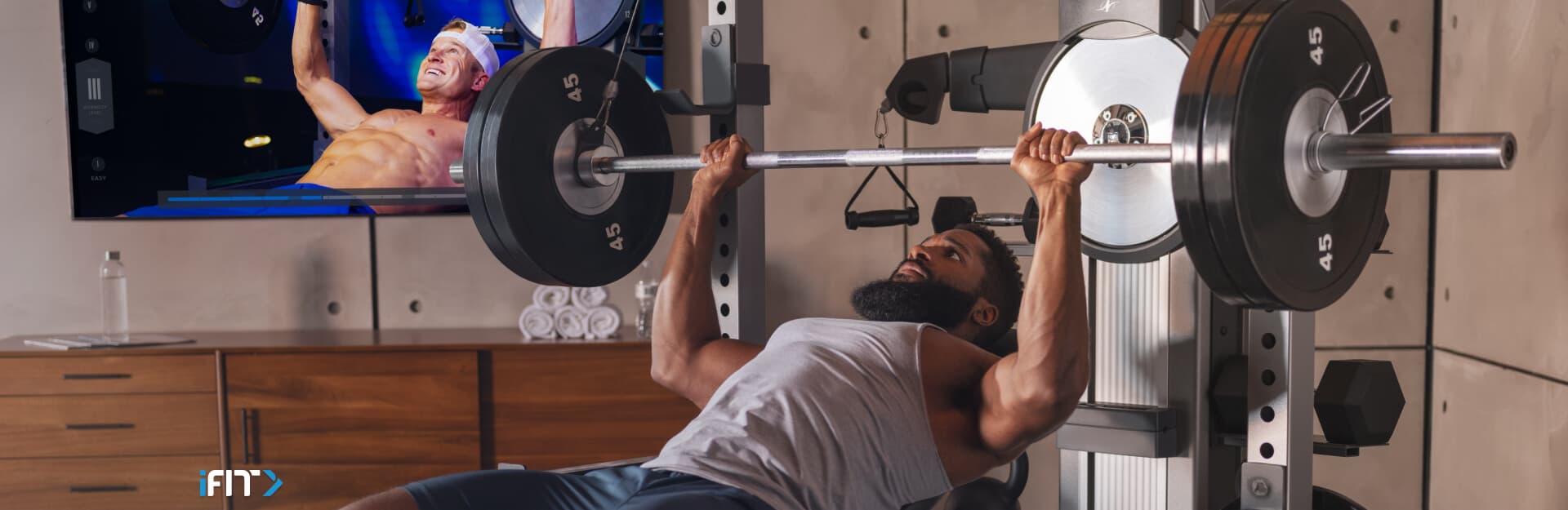
Top At-Home Chest Workouts for Men
A balanced and strong body is crucial for conquering both everyday tasks and athletic feats. Whether you’re training to run your first marathon, racing family members down the mountain on a ski vacation, or picking up your toddler from the floor during a temper tantrum, your body’s strength is being tested.
Focusing on a home workout that includes both cardio and strength training sets you ahead of the curve. According to the Centers for Disease Control and Prevention (CDC), “only 21.9% of men and 17.5% of women (age adjusted) in 2004 reported strength training two or more times per week.”
If you do lift weights regularly, it’s important to analyze the strength exercises you perform and the specific muscles they target. After careful consideration, you may begin to identify some gaps in your fitness regimen. Often, chest exercises are left behind, even in the most regimented workouts. Addressing these gaps to achieve an all-encompassing home workout makes all the difference when tackling daily activities and athletic challenges.
Men are more likely to include chest exercises in their fitness routine. They may be more focused on bulking up muscles in this area of the body. While some women may not be as interested in bulking up, their bodies can also benefit from adding chest workouts to strength training days.
Chest muscles are crucial to your structural balance and strength. When you develop a comprehensive routine in your home gym that includes effective chest exercises, you’re likely to improve strength and see results.
To ensure your chest muscles are getting the work they need, review the muscles you should consider targeting. Learn why these chest muscles are so important. Take a look at the following simple exercises to add to your home workouts that will help you build chest strength.
What muscles will your chest workouts target?
Men are likely to include chest classes in their routine to enjoy the physical results. Not only do chest muscles complement a chiseled physique, but they’re also crucial to your body’s functionality, strength, and balance.
These muscles help you breathe, lift, and move. They’re also vital to improving your posture and preventing back or neck pain. When you incorporate a challenging chest workout into your fitness regimen, you’ll perform exercises to strengthen and tone several different muscles.
1. The pectoralis major and minor
The most well-known chest muscles are the two primary muscles, the pectoralis major and pectoralis minor. Together, they’re commonly referred to as “pecs.” The pectoralis major is located under the breastplate. The pectoralis minor can be found in the upper part of the chest.
These muscles fire up any time your body requests to move your arms. This includes rotational, lateral, and vertical movement. When you lift or lower something, such as a child or a bag of groceries, your pecs activate. They take on the weight and ensure your body remains stable as you lift and lower.
Your pectoral muscles are also crucial throughout the breathing process, specifically during inhalation. Your body calls on these muscles to hold up your head and neck. Strong pecs ensure you continue to maintain a healthy posture, even if you’re looking at your phone or using a keyboard for hours at a time.
2. The sternocostal head and clavicular head
The sternocostal head and clavicular head are two other muscles in your chest area that assist with functionality. The sternocostal head attaches to your sternum and ribs. This muscle allows for extension when your arm is flexed. It helps lift your arm at the shoulder joint through adduction, allowing you to move it toward your midline.
The clavicular head is attached to your clavicle and skull, incorporating your upper chest muscles. It allows for flexion when your arm is extended. This muscle also helps to rotate and support your neck and head. Every time you nod your head “yes” or shake your head “no,” you’re engaging your clavicular head muscle.
3. The serratus anterior muscles
The serratus anterior muscles are located between your clavicle and first rib. These chest muscles help to protract and retract your scapula. This movement is most synonymous with throwing and retracting a solid punch in the boxing ring.
When your serratus anterior muscles are engaged, they allow for anteversion and protraction of your arm. These muscles also work together with other parts of your body to help lift weight over your head.
Healthy and productive breathing is also attributed to strong serratus anterior muscles. These muscles gently lift the ribs, so your lungs can fill with air during the respiration process.
A comprehensive chest workout should challenge all of the muscles in your chest, not just your pecs. Incorporate well-rounded chest exercises into your routine to ensure your body is functioning at peak level.
Which chest exercises should you add to your home workout?
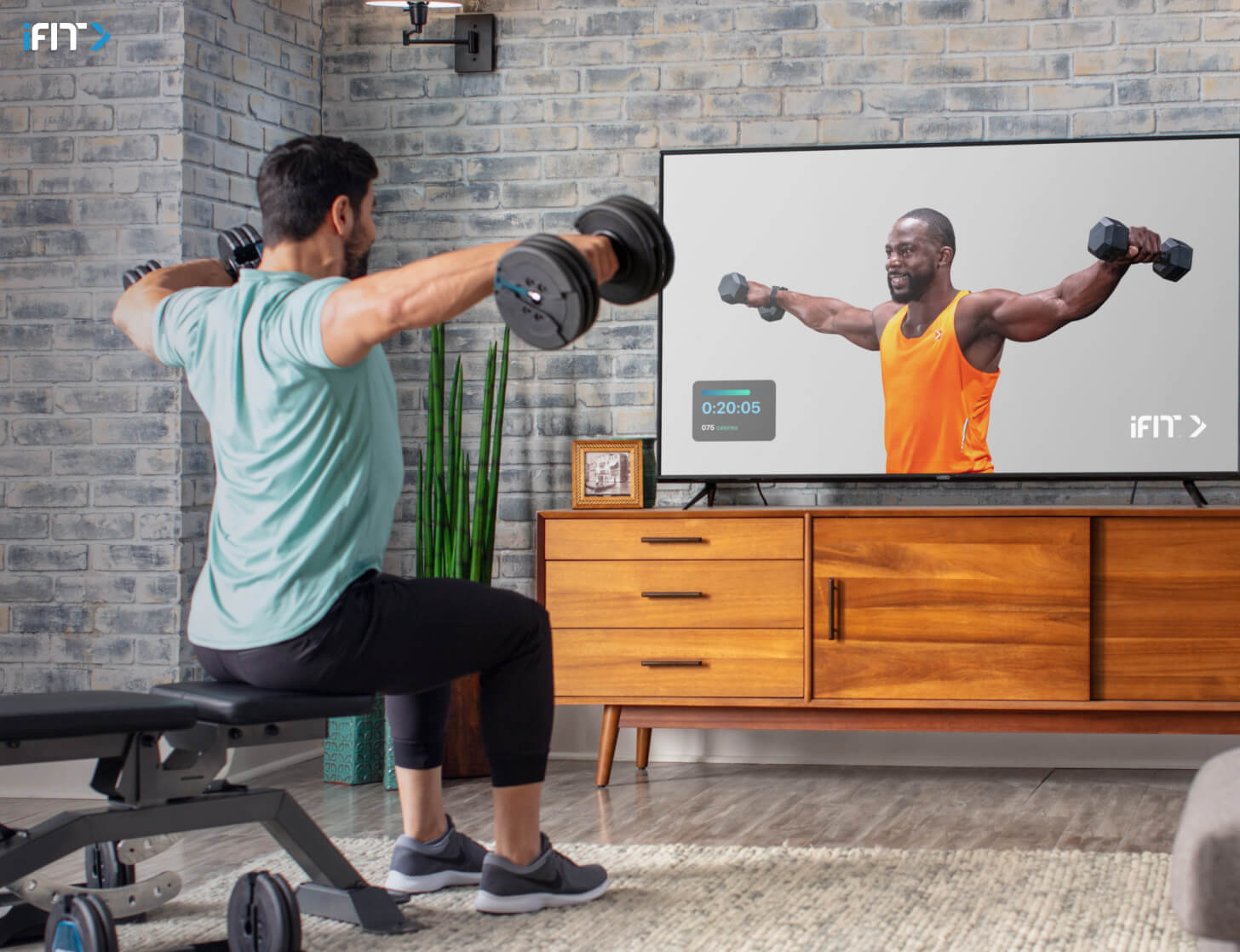
There are many types of chest exercises that target different muscles. Here are a few simple exercises you can add into your routine to help improve your strength and fitness. When starting your home gym workout, begin with light weight (or no weight) and fewer reps. Then, slowly and safely increase weight and repetitions. Always focus on proper form.
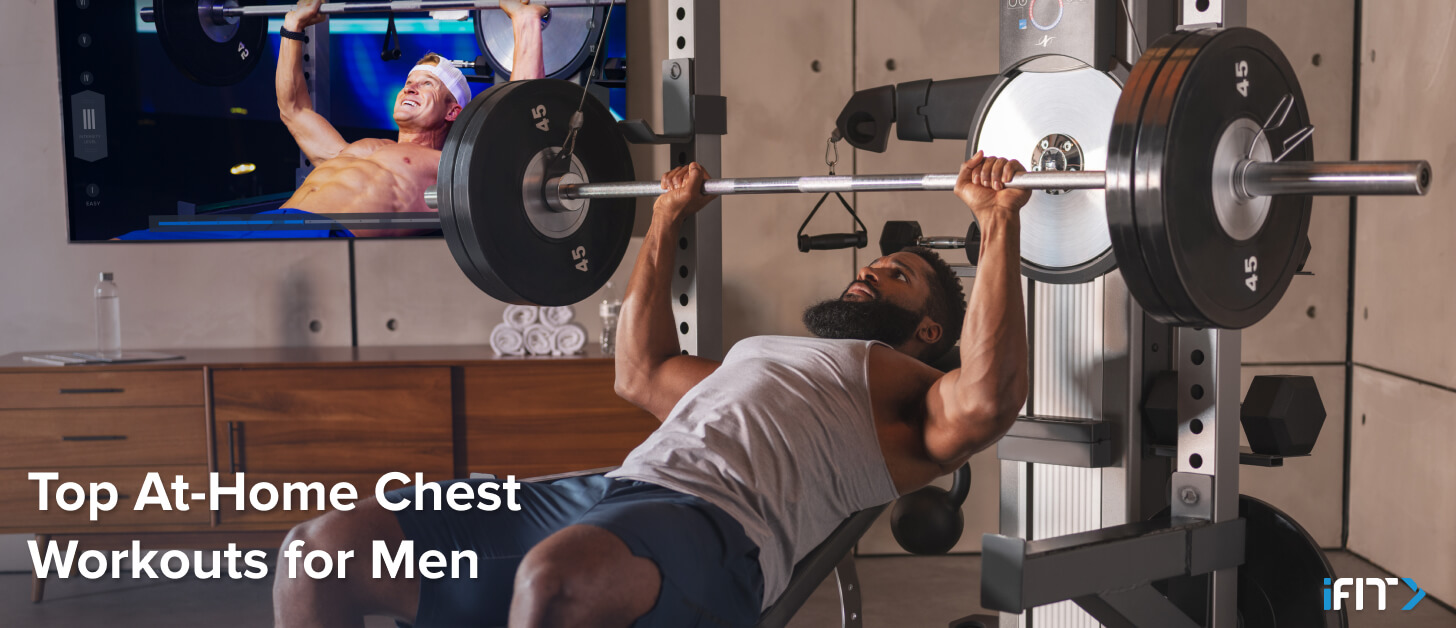
1. Bench press
A bench press may seem intimidating, but this chest exercise is simply a chest press. You perform it with a barbell instead of dumbbells, while laying on a bench instead of a mat. While a barbell bench press is one of the most effective chest exercises, you may not have a barbell or bench handy. In this case, you can still work your chest muscles through a chest press instead.
A personal trainer may recommend a bench press to help male clients add muscle mass in the chest area. Even with light barbell weight, enlist a spotter when performing this chest exercise to ensure you stay safe.
As your chest muscles strengthen and you become comfortable with the form, you can begin to increase the weight you press. In addition to strengthening your chest muscles, you may also see improvements in your tricep and trunk muscles if you consistently add bench presses to your routine.
2. Push-ups
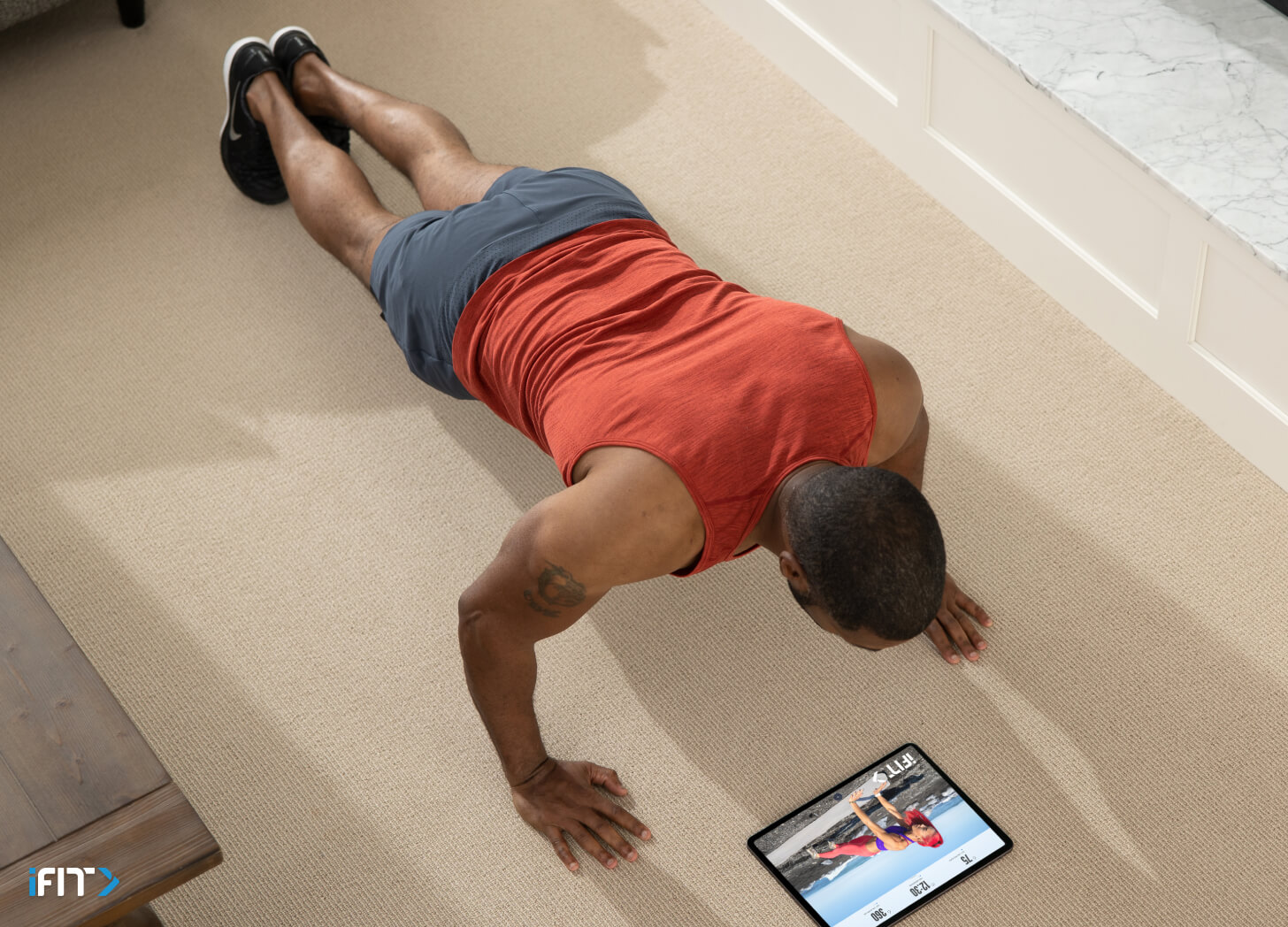
No equipment? No problem. You can still get an effective strength training workout for your chest in your home gym with push-ups. Find a comfortable surface and perform push-ups on your toes and hands. You may also scale it down to your hands and knees to start. If you’re just starting out, try push-ups while standing, with your hands against a wall. You can also use an elevated surface, such as a bench or stairs, to modify this exercise.
Many fitness enthusiasts assume that bodyweight-only exercises are easier. However, push-ups can be challenging. You should begin to feel the effects of this tough exercise right away.
In addition to strengthening your chest muscles, push-ups also tackle your core, shoulders, and triceps. To keep up your motivation, challenge yourself to increase the number of reps you perform with each workout session.
3. Chest fly
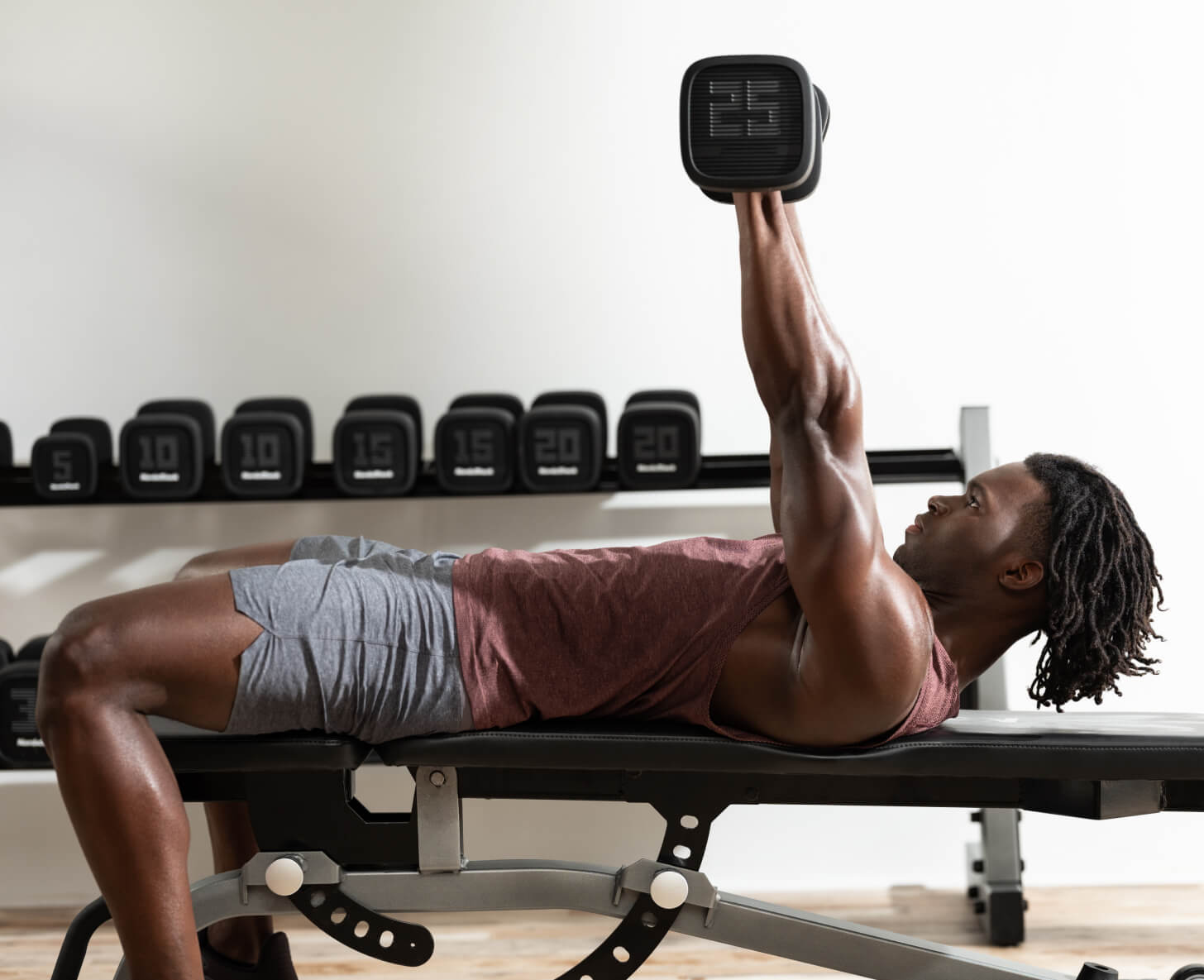
You don’t need expensive gym equipment for this chest exercise, which mainly focuses on strengthening the pecs. You can try a chest fly in your home gym with just a mat and dumbbells. Laying on your back, hold the dumbbells in your hands, with your arms extended straight over your chest. Keeping your arms slightly bent, move them out to their respective sides slowly and simultaneously. Then, bring them back to the starting position and repeat. Press your back to the mat and engage your core throughout the movement.
Not only will you feel this exercise working your chest muscles, but your back and triceps will feel the burn as well. The chest fly is a challenging chest exercise, so start with light dumbbells. If you don’t have dumbbells, water bottles or soup cans may do the trick as you begin to build strength.
If you plan to increase your weight, keep an eye on your form to ensure safety and avoid injuries. Asking a friend, personal trainer, or family member to spot you during this chest exercise will keep your form in check.
Why should you add chest exercises to your fitness routine?
There are many benefits to chest workouts. Adding these exercises to a balanced home workout is bound to improve your overall fitness. Your upper body’s ability to move and function properly relies on the strength of your chest muscles. These muscles also help with breathing, posture, and other vital functions.
Keeping your chest muscles strong with home workouts that incorporate chest exercises is the best way to build strength and improve fitness. Here are just a few important reasons you should consider adding a chest exercise or two to your upper body workout regimen.
1. Lifting is easier
Carrying around a toddler, hauling suitcases through the airport, pushing a full shopping cart, or carrying groceries up two flights of stairs are basic tasks that require strength. It may seem like your body calls on strength solely from your biceps or back for lifting. However, your chest muscles are also crucial for efficiency and stability.
Whenever you need to push, pull, or lift something, your body relies on your chest muscles (more specifically, your pecs) to help perform the motion. When your chest muscles are strong and capable, they have no trouble engaging. They take on the weight of the item, child, pet, or dumbbell on their own. With strength, your chest muscles don’t recruit other neighboring muscles to help, such as your neck or back. This prevents injury, pain, or imbalance in other areas of your body.
2. Your posture improves
Bad posture and habitual slouching are not only bad habits but also dangerous to your health. When you maintain bad posture throughout the day, your diaphragm is constricted. This doesn’t allow you to breathe properly. Poor posture over an extended period of time may also lead to digestion issues, neck pain, or back pain.
It’s a common assumption that good posture is solely dependent on the strength of the core. Strong core muscles are helpful for good posture and healthy movement. Your chest muscles also come into play as you attempt to keep your spine tall and straight.
Your pectoral muscles are connected to your shoulders. They’re useful when you pull your shoulders back to sit or stand up straight. With strong chest muscles, it’s easier to maintain proper posture. By actively incorporating a chest class into your fitness schedule, you’re strengthening the muscles necessary to achieve proper posture. This allows you to avoid a wealth of potentially harmful side effects associated with long-term slouching.
3. Your breathing improves
With good posture comes proper respiratory function. If your body stays in a tall and lengthened position, your internal organs have the space they need to suitably do their job.
Not only do chest muscles help with proper posture, but they’re also a vital component in the inhalation process. These muscles are recruited when you take a deep breath because they assist in the slight expansion of your ribcage. This expansion allows your lungs to take in more air. You’re treated to a deep and luxurious breath, which is desperately needed if you’re stressed or overexerting yourself physically.
4. Your other muscles get stronger
Even if you’re focusing on a chest workout, there aren’t many chest exercises that specifically isolate the pecs or clavicular head. Whether you hit the mat for a few push-ups or lay down for a bench press, your body is likely incorporating other muscles to perform the exercise.
Most chest workouts inadvertently work your biceps, triceps, shoulders, or other surrounding muscles. In some cases, your abdominal muscles or leg muscles may also be activated along with the chest muscles you’re targeting.
Depending on the chest exercise you’re performing, you may also strengthen your back muscles, helping with posture and overall fitness. When you add some chest classes to your fitness routine, you’re also improving the strength of other surrounding muscles simultaneously. You’re getting more bang for your buck!
5. Your muscle definition increases
Perhaps one of the most common reasons that men tackle chest workouts is to improve their physique. Chest workouts have several health benefits, including improved posture and decreased risk for neck or back injury. When you include chest exercises in your workout, you’re also likely to notice a difference in your appearance.
As these chest muscles build, their definition becomes more noticeable. Chest exercises are also likely to build surrounding muscles. This improves muscle tone and definition in your entire upper body. With improved posture and increased sculpting, you’re bound to look (and feel) more fit and strong.
Try an iFIT chest workout today
Ready to add some chest workouts into your fitness routine? Your chest muscles are crucial to your body’s strength, functionality, and health. There are countless chest workouts on the iFIT fitness app. These workouts are dedicated to helping you build muscle and increase strength. First, sign up for an iFIT account to gain access to thousands of at-home workouts in the iFIT Library!
Still working on expanding your home gym but want to add in chest classes? Start with a bodyweight-only strength program! Meet your personal iFIT Trainer Zac Marion on the mat for the Beginner Bodyweight Strength Series. In these six strength workouts, you’ll focus on body burn and building muscle.
If you have dumbbells and you’re ready to lift, join iFIT Trainer Gideon Akande for the Strength Training 101 Series. Throughout these 15 beginner home workouts, Gideon will teach you proper form. He’ll slow down exercises and focus on each movement. You’ll be a weightlifting pro by the end of the series!
Tackle the Next-Level Strength Training Series with iFIT Trainer John Peel if you already feel confident in your strength training form. Over the next 12 weeks of intermediate strength workouts, you’ll increase strength and improve fitness. Throughout these 42 weightlifting classes, you’ll incorporate a variety of home gym equipment. You may use dumbbells, kettlebells, resistance bands, or loop bands while fine-tuning your chest exercise forms.
Disclaimer: This blog post is not intended to replace the advice of a medical professional. The above information should not be used to diagnose, treat, or prevent any disease or medical condition. Please consult your doctor before making any changes to your diet, sleep methods, daily activity, or fitness routine. iFIT assumes no responsibility for any personal injury or damage sustained by any recommendations, opinions, or advice given in this article. Always follow the safety precautions included in the owner’s manual of your fitness equipment.
You might also like

Introducing SmartAdjust™ for Your Treadmill: iFIT’s New Personalized Workout Experience
SmartAdjust personalizes your treadmill workout before it even starts, adapting speed and incline to your fitness level in real time.
March 16, 2021
Strength Training While on GLP-1: A 6-Week Plan
When your body weight changes, you aren’t just losing fat—research shows you risk losing lean muscle mass, too. Protecting that muscle is the key to maintaining your metabolism and everyday strength. This practical 6-week guide breaks down exactly how to structure a simple, 20-to-30 minute full-body strength routine 2–3 times a week. Built around foundational compound movements like squats and rows, this plan shows you how to safely implement progressive overload without burning out your energy. Give your body a clear signal to keep its muscle and build a routine that sticks.
May 26, 2026

Find Your Stride with Tommy Rivs in the Joy of Running Part 2: Redwoods, Workouts 1-10
There’s just something magical about taking your next step forward, especially when it means you’re surrounded by the towering redwoods and rugged beauty of California’s northern coast. iFIT Trainer Tommy Rivs’ newest series will help you experience the magic of this region with the Joy of Running Part 2: Redwoods, Workouts 1-10. This beginner-friendly program is designed to help you progress from walking to running at your own pace.Explore California’s Scenic CoastSet along breathtaking coastal trails and through scenic redwood groves, this series brings the natural beauty of Northern California to your treadmill. From the peaceful paths of Laguna Point to the rolling meadows of Mendocino Headlands, each workout is an opportunity to breathe, move, and connect with the pure joy of movement.Make Progress with Tommy RivsKnown for his thoughtful coaching and love of movement, Tommy Rivs will guide you through a mix of walking and running intervals to gradually build your endurance and confidence. Each workout keeps the speed steady while changing your movement so you can focus on how your body feels and adapts as you move.Whether you’re returning to fitness or taking your first steps toward running, this series is all about moving forward with purpose. Tommy will help you to:Develop endurance and build strength with progressive intervalsImprove your form and consistency with his expert guidanceReconnect with the joy of movement in an inspiring settingBuild confidence to take on your next running challengeThis is only the beginning; there’s so much more to come with Rivs. For now, lace up those shoes and join him for an incredible journey amongst the redwoods.Join Tommy Rivs in the Redwoods
November 3, 2025